
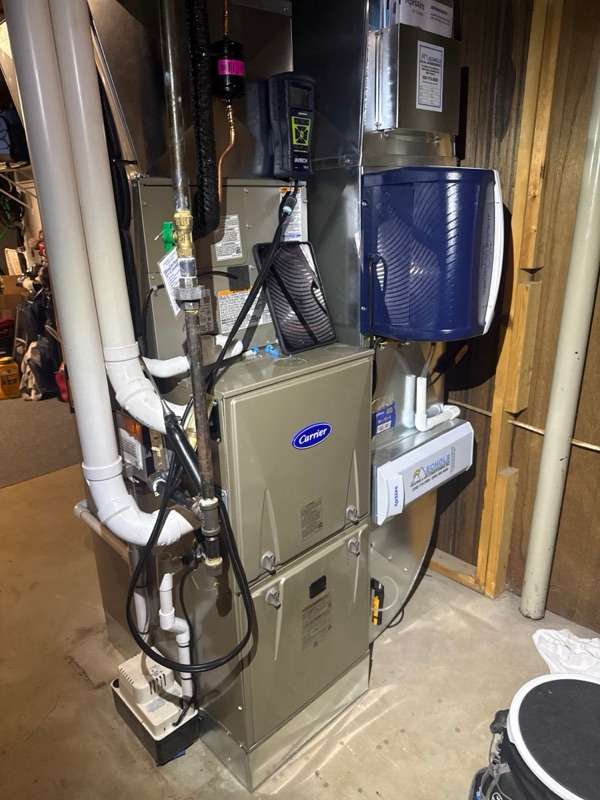
Repair your furnace when the problem is a single worn part, the heat exchanger is sound and the unit isn't near the end of its life. Consider replacing it when it's over 15 years old, when the repair would cost more than half the price of a new furnace, or when it's a low-efficiency unit below 80 percent AFUE, the tests the Department of Energy uses in its renovation guide. A cracked heat exchanger or repeated safety lockouts usually mean replacement.
A simple repair or replace test from the Department of Energy
DOE's Building America guide to HVAC renovations includes a short decision tree for heating systems, and it holds up well in practice. It asks three questions about a broken system:
- Is the system over 15 years old? Age alone doesn't condemn a furnace, but past 15 years each repair buys less time.
- Will repairs cost more than half the cost of replacement? If yes, the guide points to replacement.
- Is the system very inefficient? DOE flags draft-hood gas furnaces and units under 80 percent AFUE as candidates to replace rather than repair.
Furnace repairs that are usually worth making
Plenty of no-heat calls come down to one inexpensive part on a furnace with years left. In those cases, replacing the furnace would be spending a lot of money to solve a small problem.
Common examples include a dirty or worn flame sensor that lets the burners light and then shuts them off, a cracked hot surface igniter, a failed capacitor on the blower motor, a pressure switch or its tubing on a high-efficiency furnace, or a clogged condensate trap. An inducer or blower motor costs more but can still be a sensible repair on a mid-life furnace. A control board can go either way, depending on the furnace's age and whether the board is still made.
The point is to know which part failed and why before deciding. A furnace that's tripping a limit switch because of a clogged filter or closed registers doesn't need a new limit switch, it needs airflow. Our furnace repair page lists what a full diagnosis covers.
Problems that push a furnace toward replacement
Some findings change the conversation from what to fix to whether to keep the furnace at all.
- A cracked or failing heat exchanger: The heat exchanger keeps combustion gases separate from the air you breathe. Once it's cracked, the safe options are replacing the heat exchanger, which is costly and often not practical on an older unit, or replacing the furnace.
- The same failures every winter: ENERGY STAR lists frequent repairs combined with rising energy bills as a sign it's time to consider replacing.
- Parts that are no longer made: On older furnaces, a discontinued control board or motor can mean a long wait or a costly workaround.
- Comfort problems the furnace can't fix: ENERGY STAR also names rooms that are too hot or too cold, humidity problems, excessive dust and a noisy system as reasons to evaluate the whole system.
- A furnace that was never sized right: An oversized furnace short-cycles, wears its parts faster and leaves temperature swings. Replacing it with the same size repeats the problem.
Safety first: when not to wait
If your carbon monoxide alarm sounds, or anyone in the house has headaches, nausea or dizziness that improve when they leave, leave the house with everyone in it and make the call to 911 or the gas company once you're out. If you smell gas, leave the house without switching lights or appliances on or off and call the gas utility from a safe distance. Don't restart the furnace until it has been checked.
Visible signs that warrant a prompt service call include soot around the furnace or registers, a burner flame that's lazy, yellow or rolling instead of steady and blue, or rust and water around the base. A technician can tell you whether it's a repair or a sign of a deeper problem.
How age and efficiency change the furnace math
ENERGY STAR suggests considering replacement when a furnace is more than 15 years old and says an ENERGY STAR furnace is 15 percent more efficient than a conventional one. On its furnace product page, it estimates that certified northern gas furnaces save about $160 a year in energy costs compared with standard models. Your savings depend on your gas price, your house and how efficient your current furnace really is.
The other part of the math is how long the repaired furnace will last. Spending a few hundred dollars to get a sound 8-year-old furnace through many more winters is easy. Spending a similar amount on a 22-year-old furnace that has needed something every year is a bet that the next part won't fail. That's why we price both options on older equipment, so you can see the trade-off instead of guessing.
If you replace: options beyond a like-for-like furnace
A replacement is a chance to fix what the old system got wrong. We size the new furnace from a heat loss calculation rather than copying the old nameplate. Moving from an older chimney-vented furnace to a high-efficiency condensing model means plastic venting through a wall or roof and a condensate drain; if a gas water heater shared the chimney, its venting has to be rechecked, because a chimney that served two appliances may no longer draft properly for one small one.
It's also the moment to look at a heat pump. If your air conditioner is aging, adding a heat pump alongside the new furnace, as a dual fuel system, lets the heat pump handle most spring and fall heating. Our furnace replacement page covers the install process, and our heat pump vs furnace guide explains when the hybrid route pays off.
How we help you decide
Our NATE certified technicians diagnose first. You get an explanation of what failed, a written price for the repair, and, on older furnaces, a price for replacement alongside it so you can compare. We don't start work until you approve.
If you'd like a quick range on a new system before anyone visits, our instant estimate tool shows pricing in a few minutes. Members of an Echols service agreement save up to 20 percent on repairs depending on membership level, and Carrier financing through Wells Fargo is available over 6, 12, 36 or 60 months with approved credit. Call (234) 248-2777 to schedule a diagnosis.
Sources
- DOE Building America, Energy Renovations: HVAC (repair or replace decision tree: over 15 years, repairs over half of replacement cost, AFUE under 80%)
- ENERGY STAR: When is it time to replace? (furnace over 15 years, 15% more efficient, warning signs)
- ENERGY STAR furnaces: northern gas furnaces about $160 per year in savings