
Desert Aire service and repair
Our technicians are Desert Aire factory trained, so they know the controls, refrigerant circuits and heat recovery options these units use.
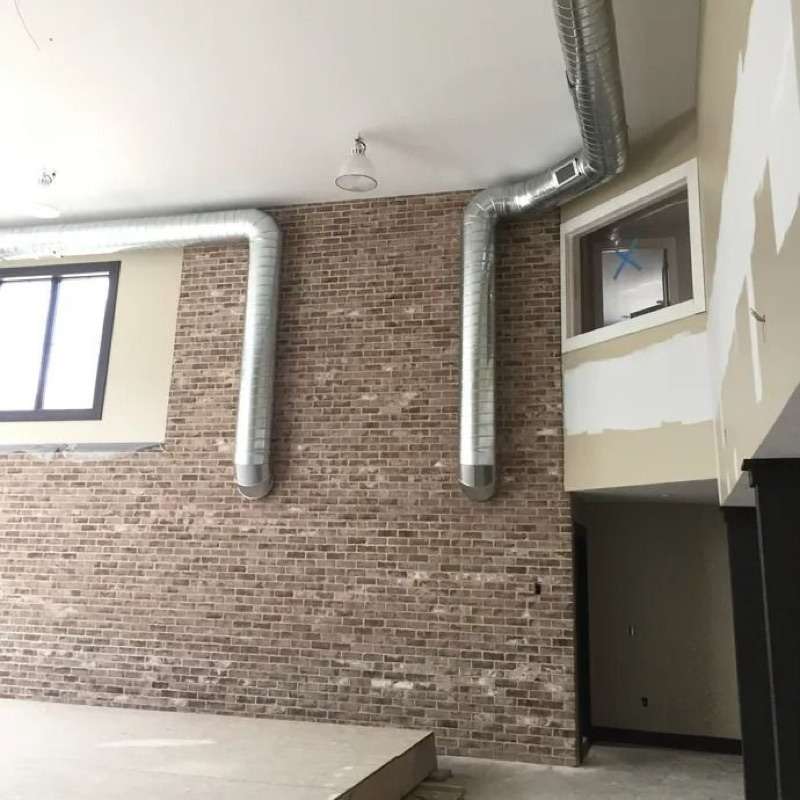
Indoor pools and natatoriums · Desert Aire factory trained
An indoor pool evaporates water into the room every hour of every day, and in an Ohio winter that moisture heads straight for the coldest surface it can find: windows, exterior walls and the roof deck. Echols Heating & Air Conditioning services, repairs and replaces pool room dehumidification systems for home pools and commercial natatoriums, and our technicians are Desert Aire factory trained.
Tell us what's going on and we'll get back to you.
Pool room dehumidification is the control of humidity, air temperature and ventilation in an enclosed pool space, using a dehumidifier built for the job rather than ordinary air conditioning. A natatorium dehumidifier pulls moisture from the room air, and many models reuse the heat they recover to warm the room or the pool water. Echols Heating & Air Conditioning, with Desert Aire factory trained technicians, repairs, maintains and replaces these systems for residential and commercial pools across Northeast Ohio.
We work on systems in home pool rooms and in commercial facilities.
Our technicians are Desert Aire factory trained, so they know the controls, refrigerant circuits and heat recovery options these units use.
Filter changes, coil cleaning, condensate checks, refrigerant and electrical checks, and a corrosion inspection, on a schedule that suits a room that never stops evaporating.
When a unit is corroded through or no longer worth repairing, we size the replacement to the pool's surface area, water temperature, room temperature and how the pool is used.
Home pool rooms are often attached to the house, so a moisture problem can spread into neighboring rooms and the attic. We look at the pool room and the spaces around it.
Pools at hotels, fitness clubs, schools and therapy centers see more swimmers and splashing, which raises the moisture and ventilation load. Commercial service contracts keep those systems on schedule.
Learn more about commercial natatoriumsUsually humidity is running high, or the supply air isn't washing the windows the way the duct design intended. A little fog at the coldest corners on a frigid night can be normal; water running down the frames is not.
This typically comes from chloramines building up in the air, which points to too little outdoor air or exhaust. The dehumidifier's ventilation settings and the pool's water chemistry both play a part.
Moist, chlorinated air attacks steel, fasteners and coils. Corroded ductwork or a rusting unit cabinet means the room has been too wet for too long.
A refrigerant leak, a dirty coil, a failed compressor or a blocked filter can let the dehumidifier run without removing much water.
Call or text the office and we'll help you sort out repair, replacement or a tune-up.
Akron and Northeast Ohio
The gap between inside and outside is what makes a Northeast Ohio pool room tricky. A natatorium is kept warm and humid all year, while for much of the winter the air outside sits near or below freezing. Any surface that drops below the room's dew point, such as a window frame, a cold exterior wall or the underside of the roof deck, collects water.
Common design targets keep pool room air a degree or two warmer than the water, which slows evaporation, with relative humidity somewhere around 50 to 60 percent. Run the room cooler than the water or let humidity drift up, and both evaporation and condensation increase.
The building has to cooperate too. A vapor barrier in the walls and ceiling, supply air aimed across the glass, and enough exhaust to keep the pool room slightly negative to the rest of the house or building all matter. When we're called about a moisture problem, we look at those pieces as well, because a perfectly working dehumidifier can't fix a supply duct pointed the wrong way.
See the full service areaWe measure temperature and humidity in the space and compare the air temperature with the pool water temperature.
We review alarms and setpoints, then check refrigerant pressures, coils, filters, fans and the condensate drain.
We look at where the supply air goes, whether the glass gets enough of it, and how much outdoor air and exhaust the system moves.
You get a written summary of what we found and a price for repairs, setting changes or replacement.
After repairs, we measure humidity and temperature again so you can see the room holding where it should.
Pool rooms vary too much for a phone quote. These are the main factors.
Google reviews
HVAC service tech Devon Ballard is a consummate young professional who is outstanding at what he does. He not only possesses excellent expertise, but his communication skills and patience in addressing our concerns and issues sets him apart as a professional.
Devin was very knowledgeable and explained all the other options.Thank you for the promptness for the visit.
Most pool rooms are designed for relative humidity around 50 to 60 percent, with the air a little warmer than the water. Much lower wastes energy and speeds evaporation; much higher invites condensation and mold.
No. The pool keeps evaporating whether anyone swims or not, so the dehumidifier has to keep running. A pool cover cuts evaporation when the pool sits unused, and some systems have settings for unoccupied hours.
The glass is colder than the dew point of the room air. High humidity, weak supply airflow across the windows or a very cold night can each cause it. We check the humidity setpoint and the air distribution first.
Both. We service dehumidification systems for pool rooms at houses and for commercial natatoriums.
Plan on regular professional maintenance at least once a year, with filters checked more often. Pool rooms are hard on equipment, and catching corrosion and coil buildup early protects the unit.
Not well. An air conditioner removes some moisture but overcools the room, and portable dehumidifiers can't keep up with a pool's evaporation or stand up to chlorinated air. A purpose-built pool unit handles humidity, temperature and ventilation together.
It means our technicians have been trained by Desert Aire on its pool dehumidification equipment, including controls, refrigeration and heat recovery. That shortens troubleshooting on Desert Aire units.
Ready when you are
Call or text (234) 248-2777 and tell us what you're seeing: fogged glass, a chlorine smell or an alarm on the unit. We'll test the room and the equipment and give you a written plan.
Call or text(234) 248-2777We'll get back to you during office hours.