
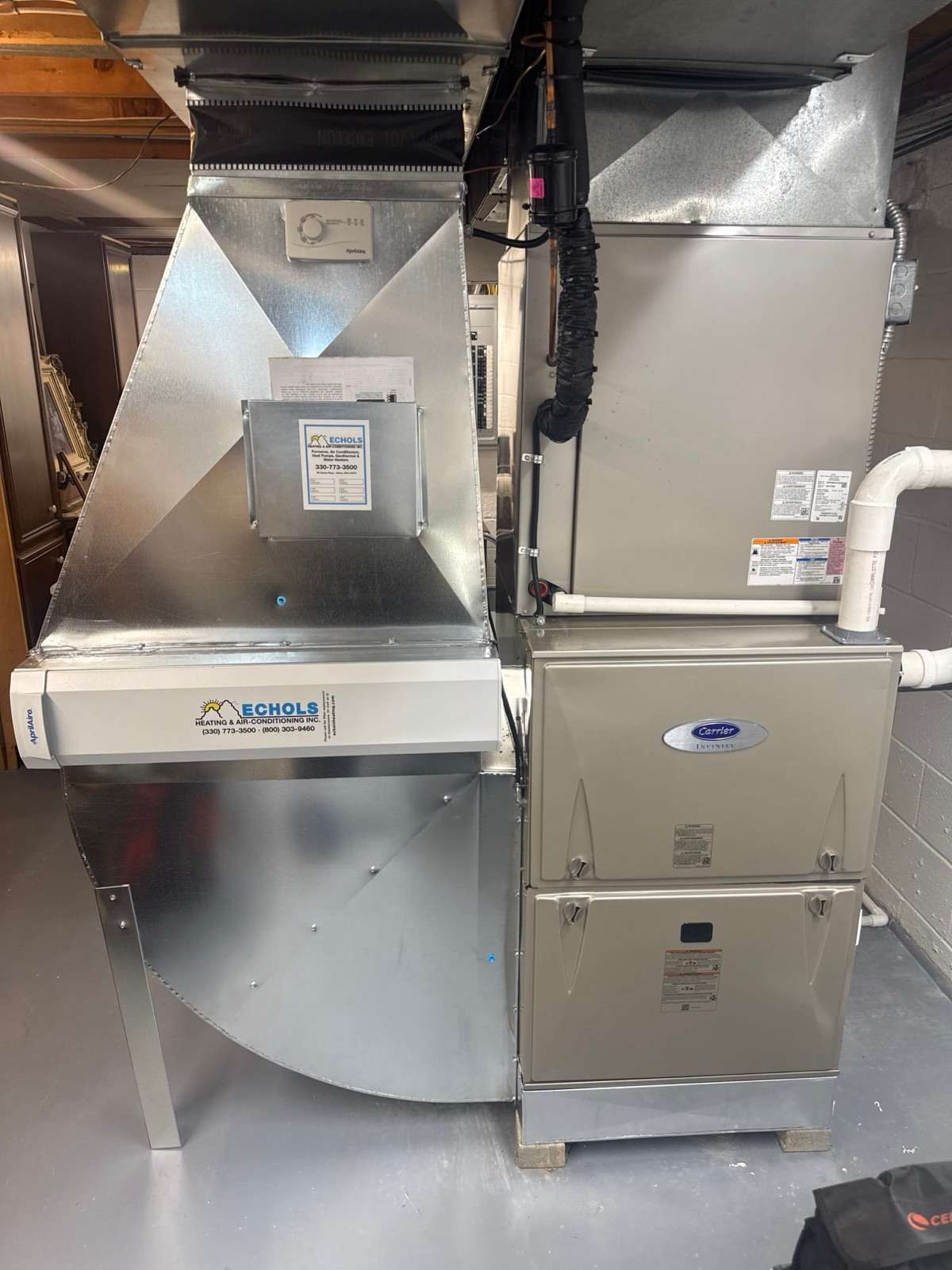
In the heat pump vs furnace question for Ohio, the answer for many homes with natural gas is both. A heat pump moves heat and is very efficient in mild weather, while a gas furnace burns fuel and delivers strong heat no matter how cold it gets. A dual fuel system, which DOE describes as an air-source heat pump combined with a gas furnace for supplementary heat, runs the heat pump most of the season and switches to the furnace at a set outdoor temperature.
How a furnace and a heat pump make heat
A gas or propane furnace burns fuel in a sealed combustion chamber, and a heat exchanger passes that heat to the air your blower pushes through the ducts. It produces the same strong, hot air at 40°F or at minus 5°F. Its efficiency is rated by AFUE, the share of fuel energy that ends up as heat in the house. ENERGY STAR says certified northern gas furnaces are up to 18 percent more efficient than baseline models.
A heat pump doesn't burn anything. It uses refrigerant and a compressor to move heat from outdoor air into the house in winter, and reverses to work as an air conditioner in summer. Since it relocates heat that already exists, each unit of electricity it uses can bring more than one unit of heat into the house. The trade-off is that its output and efficiency fall as the outdoor air gets colder; DOE's renovation guide puts that drop for standard central units at roughly 35°F and below, which is why they need a backup.
What decides running cost in a heat pump vs furnace comparison
No single number settles which is cheaper to run, because it depends on what you pay for gas or propane, what you pay for electricity, and how efficient each piece of equipment is at a given outdoor temperature. Rates change from year to year and from one utility to the next, so be wary of any blanket claim.
Industry efficiency programs use two ideas that help here. The system balance point is the outdoor temperature below which the heat pump's output falls short of your home's heat loss. The economic balance point is the temperature at which the furnace becomes cheaper to run than the heat pump, based on your fuel and electric prices. In a dual fuel setup, the switchover temperature should sit at whichever of those two comes first for your house.
Fuel type changes the picture quickly. Propane usually costs more per unit of heat than natural gas, so homes on propane tend to get more value from letting a heat pump carry more of the season. Homes on all-electric resistance heat have the most to gain: DOE says today's heat pumps can cut electricity use for heating by roughly 65 percent compared with electric resistance heating.
How a dual fuel system splits the season
A dual fuel system, sometimes called a hybrid system, is a heat pump outdoors in place of a central air conditioner, connected to a gas or propane furnace indoors. One thermostat runs both. In summer the heat pump cools like any air conditioner. In spring, fall and the milder parts of winter it heats the house. When the outdoor temperature drops past the switchover point, the heat pump steps aside and the furnace takes over.
Because the furnace covers the deep cold, the heat pump doesn't have to be oversized to handle the worst January night, and you never depend on electric resistance heat strips. If the heat pump ever needs service in winter, the furnace can carry the house on its own. That redundancy is a big part of why dual fuel is popular in gas-heated Northeast Ohio homes. Our dual fuel heat pump page covers how we set it up and pick the switchover.
When a furnace alone still makes sense
A heat pump isn't the right answer for every house. A high-efficiency gas furnace on its own can still be the practical choice in a few situations:
- Your air conditioner is fairly new: If the AC has years left, replacing just the furnace now and adding a heat pump when the AC wears out keeps working equipment in service.
- Upfront budget is the deciding factor: A furnace-only replacement generally costs less than a furnace plus heat pump.
- The ducts or electrical panel would need major work: If the house needs significant duct or panel changes to support a heat pump, that work may be better planned separately.
- You rarely use central cooling: Part of a heat pump's value is that it replaces the air conditioner. If you don't cool much, the math shifts.
When an all-electric heat pump makes more sense than a furnace
Some homes are better served by skipping the furnace. Houses with no gas line, rural properties paying for propane deliveries, and homes now heated with electric baseboard or an electric furnace are the usual candidates. In those homes, a cold climate heat pump with electric backup strips can lower heating costs and add central cooling in one project.
The key is choosing a model that's built for cold weather. ENERGY STAR's Cold Climate designation requires at least 70 percent of rated heating capacity at 5°F and a COP of at least 1.75 at that temperature, and NEEP's cold climate product list publishes each model's low-temperature output. We size these systems from a heat loss calculation so the strips are a backup, not the main heat source. Our guide to heat pumps in Ohio winters goes deeper on cold-weather performance.
Timing the decision around what's failing
Most people face this choice when something breaks, and what broke shapes the best answer. ENERGY STAR suggests considering replacement when a heat pump or air conditioner is more than 10 years old, or a furnace is more than 15 years old, especially if repairs are piling up and bills are rising.
If the air conditioner fails and the furnace is in good shape, replacing the AC with a heat pump and wiring the two as dual fuel is often the lowest-cost way in. If the furnace fails and the AC is also near the end, replacing both together lets you match the equipment and do the duct and thermostat work once; our furnace replacement page covers that side. If the furnace fails but the AC is young, a new furnace that's compatible with a future heat pump keeps the dual fuel option open.
Getting a side-by-side comparison for your home
The fairest way to choose is to see the options priced next to each other for your house: furnace only, dual fuel, and all-electric where it fits. We start with a heat loss calculation and a look at your ducts, gas or propane supply and electrical panel, then give you written prices and explain the trade-offs in plain terms.
Echols Heating & Air Conditioning is a Carrier Factory Authorized Dealer and installs both furnaces and heat pumps, so we don't have a reason to push one over the other. With approved credit, you can spread the cost over 6, 12, 36 or 60 months through Carrier's program with Wells Fargo, and our heat pump installation and repair page has more on the equipment. Call (234) 248-2777 to schedule an estimate.
Sources
- DOE Building America, Energy Renovations: HVAC (dual-fuel definition; standard heat pump efficiency drops below about 35°F)
- DOE Home Upgrades: heat pumps cut heating electricity about 65% vs electric resistance heat
- ENERGY STAR furnaces: certified northern gas furnaces up to 18% more efficient than baseline
- ENERGY STAR heat pump key product criteria (Cold Climate designation)
- NEEP Cold Climate Air Source Heat Pump specification and product list
- ENERGY STAR: When is it time to replace? (10-year heat pump/AC, 15-year furnace guidance)
- CEE/ENERGY STAR furnace specification comments defining system and economic balance points