
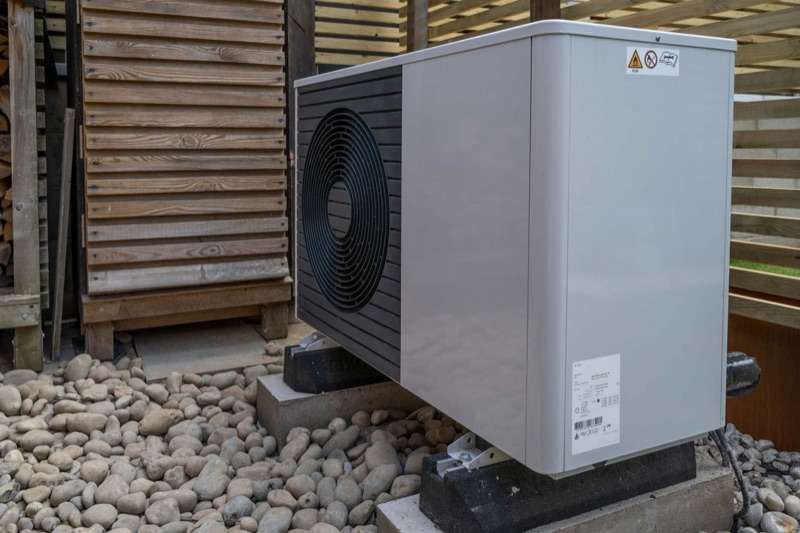
Heat pumps do work in Ohio winters, but not every heat pump works equally well. Standard air-source models lose efficiency as it drops below about 35°F, according to the Department of Energy, so they lean on backup heat. Cold climate models certified by ENERGY STAR must deliver a COP of at least 1.75 at 5°F and keep at least 70 percent of their heating capacity at 5°F. In Northeast Ohio, pair the right model with backup heat, either electric strips or a gas furnace, and size it to your house.
Why Ohio winters are a real test for a heat pump
Summit County and most of Ohio are mapped as climate zone 5A under the International Energy Conservation Code, a zone the Pacific Northwest National Laboratory's county guide labels cold. That means a long heating season with stretches well below freezing, wet snow and frequent swings around 32°F that keep frost forming on an outdoor coil.
None of that rules out a heat pump. It does mean the model you choose, how it's sized and what backs it up matter far more here than in a mild climate. DOE's own consumer page describes heat pumps as an efficient alternative to furnaces and air conditioners in moderate climates; in a climate like ours, the equipment has to be picked with the cold in mind.
How a heat pump pulls heat out of freezing air
Even at 10°F, outdoor air holds heat. A heat pump runs refrigerant through the outdoor coil at a temperature colder than the air, so heat flows into the refrigerant. The compressor then raises its temperature and the indoor coil releases that heat into your ductwork. Because it moves heat instead of making it, a heat pump can deliver more heat than the electricity it uses.
The catch is that the colder the air, the harder the compressor works for each unit of heat. DOE's Building America renovation guide notes that the heating efficiency of standard central air-source heat pumps drops when outside temperatures fall below about 35°F, which is why a backup heat source is often needed in cold climates. Frost is the other winter issue. When ice builds on the outdoor coil, the unit runs a short defrost cycle, briefly reversing to warm the coil, and you may see a cloud of vapor off the unit while it does.
What a cold climate heat pump rating actually means
Two programs help separate heat pumps built for winters like ours from ones that aren't. Knowing what they test for helps you read a quote.
- ENERGY STAR Cold Climate: To earn the designation, a heat pump must reach a coefficient of performance (COP) of at least 1.75 at 5°F, meaning it delivers 1.75 units of heat per unit of electricity on a very cold day, and keep at least 70 percent of its 47°F heating capacity at 5°F. Manufacturers also have to verify that the unit's own controls deliver that performance.
- NEEP Cold Climate Air Source Heat Pump list: The Northeast Energy Efficiency Partnerships specification targets heat pumps for climate zone 4 and colder. Its public product list at ashp.neep.org shows each model's capacity and efficiency at 5°F, 17°F and 47°F, and many utility programs use it as a qualification standard.
- Capacity at your design temperature: A rating only helps if you compare it to your house. The useful number is how much heat the specific model delivers at a cold design temperature, set against a room-by-room heat loss calculation for your home.
Evidence from a heat pump tested in Ohio
Some of the most useful cold-weather data on heat pumps comes from Ohio itself. In a DOE-funded project with Oak Ridge National Laboratory, a cold climate heat pump prototype was field tested in an occupied home in Sidney, Ohio. DOE reports that it kept the house warm at outdoor temperatures as low as minus 13°F without relying on supplemental electric resistance heat, and delivered about 40 percent energy savings during the coldest month compared with a conventional air-source heat pump.
That was a prototype, and the results were reported in 2016, so treat it as proof of what the technology can do rather than a promise for any model on the market. Since then, variable-speed compressors have become common in the cold climate units that appear on the ENERGY STAR and NEEP lists.
Backup heat: electric strips or a gas furnace
Almost every heat pump in Northeast Ohio has some kind of backup, and the choice shapes your winter bills. An all-electric system uses electric resistance heat strips in the air handler. They're simple and they work at any temperature, but resistance heat is the most expensive way to make heat with electricity, so you want the heat pump to carry as much of the load as possible.
A dual fuel system pairs the heat pump with a gas or propane furnace. The heat pump runs through most of the season, and when it gets cold enough that the furnace is cheaper or more comfortable, the thermostat hands off. For houses that already have gas and a working furnace, that's often the most practical setup; our dual fuel heat pump page explains how we set the switchover. Homes without gas, including many rural propane homes, are where a cold climate all-electric unit earns its keep.
Installation details that decide winter performance
ENERGY STAR notes that correctly installed high-efficiency heat pumps can save up to 20 percent on heating and cooling costs, and the word that matters there is correctly. These are the details we pay attention to on a Northeast Ohio install:
- Sizing from a heat loss calculation: An undersized unit runs on backup heat too often; an oversized one short-cycles in mild weather and handles summer humidity poorly.
- Outdoor unit height and placement: The unit sits on a stand or pad that keeps it above drifting snow and out from under roof drip lines.
- Defrost drainage: Meltwater from defrost has to drain away instead of freezing into an ice sheet that creeps up the coil.
- Thermostat setup: Backup heat lockouts, switchover temperatures and recovery settings are set for your system, so strips or the furnace don't kick on when the heat pump could handle the load.
- Airflow through the ducts: Heat pumps move more air at lower supply temperatures than a furnace, so undersized or leaky ducts are checked before the install.
What to expect from a heat pump on the coldest days
A heat pump feels different from a furnace. The air from the registers is warm rather than hot, and on a 5°F morning the system may run for long stretches or nonstop. That's normal for a properly sized unit. A few minutes of vapor during defrost is normal too.
What isn't normal: a coil that stays encased in ice, a house that won't reach the setpoint even with backup heat on, or backup heat running on mild days. Those point to a defrost, airflow, refrigerant or thermostat problem. Our heat pump repair and replacement page covers what we check. If you're comparing systems for a house that has no ducts in some rooms, a ductless mini-split can be another way to bring heat pump heating into those spaces. Call (234) 248-2777 to talk it through with a technician.
Sources
- ENERGY STAR heat pump key product criteria (Cold Climate: COP at 5°F of at least 1.75; 5°F capacity at least 70% of 47°F)
- NEEP Cold Climate Air Source Heat Pump specification and product list
- NEEP ccASHP product list
- DOE success story: cold climate heat pump prototype tested in Sidney, Ohio (minus 13°F, 40% savings)
- DOE Building America, Energy Renovations: HVAC (standard heat pump efficiency drops below about 35°F; dual-fuel systems)
- DOE Energy Saver: Heat pumps
- ENERGY STAR: When is it time to replace? (correctly installed units can save up to 20%)
- PNNL Guide to Determining Climate Zone by County (Summit County, OH: zone 5A, cold)