Copley, Summit County
Copley Township grew late, and its equipment is aging together
Copley stayed a farm township long after Akron filled in next door. Its center is Copley Circle, which began as two acres Gardiner and Elizabeth Greene released for public use in 1831; farmers held market days on the square, and wagons cutting the corners eventually rounded it into the circle. The northeast corner became the Village of Fairlawn in 1958 and left the township when Fairlawn became a city in 1971. Only about 3 percent of the homes in the township today were built before 1940.
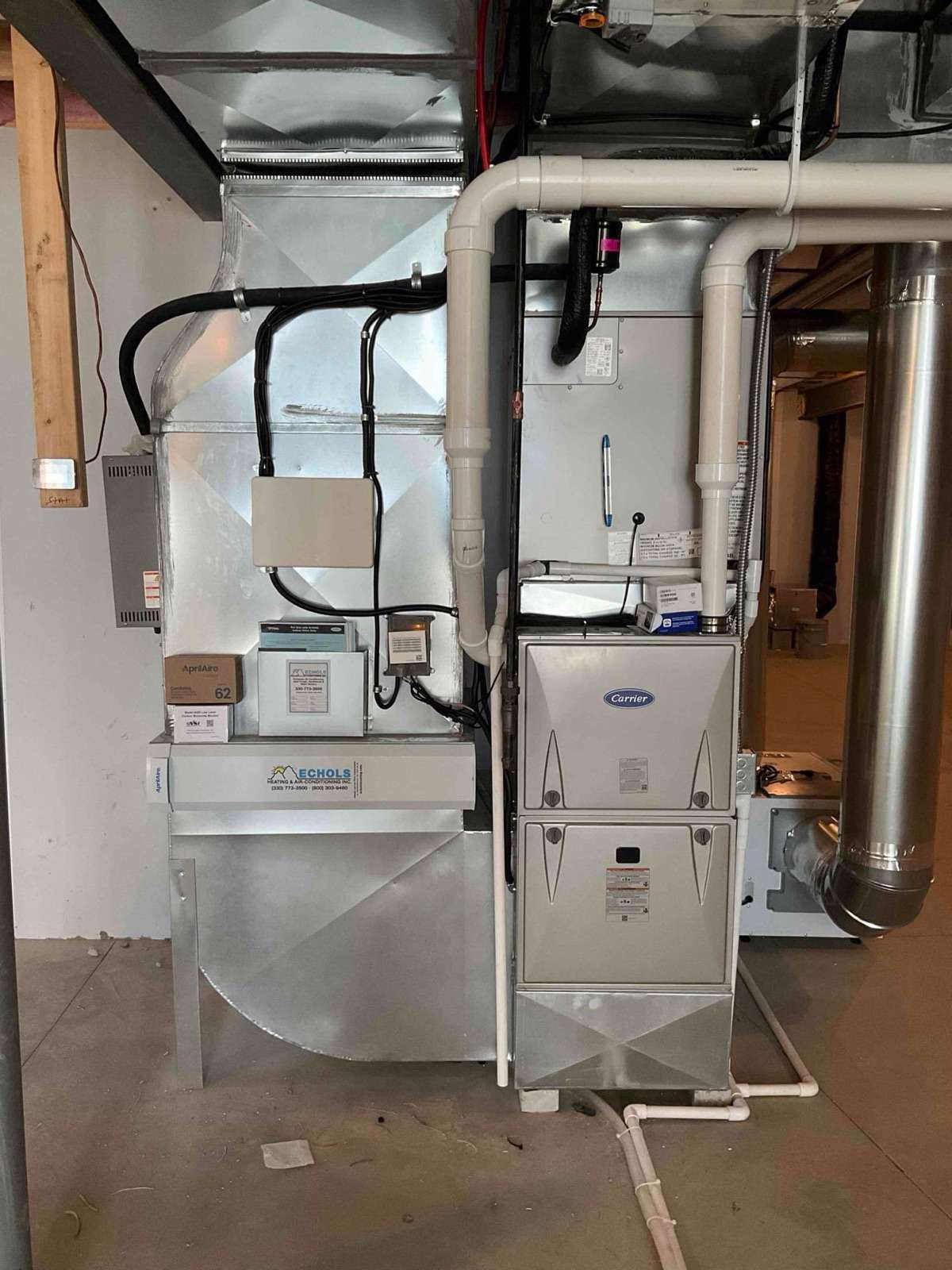
Much of the building came after 1993, when township voters approved a Joint Economic Development District with Akron, in part to bring water and sewer to "water-poor" areas. Over its first 13 years Akron laid more than $11.3 million in water lines and $9.5 million in sewer lines in the township. Census survey data for Copley Township (county subdivision, ACS 2020-2024) shows about 27 percent of its roughly 8,000 homes were built from 2000 to 2009, the largest share of any decade, and about 53 percent date from 1990 or later. A 2005 furnace and the AC installed with it are now about 20 years old, often in a whole street of houses built the same few years.
Heating fuel is more mixed than in many Akron suburbs. In the same Census data, about 81 percent of Copley households heat with utility gas, but about 16.5 percent heat with electricity and about 2 percent with propane. Electric heat in a newer house usually means a heat pump or an electric furnace with an air handler, and those need different service than a gas furnace. Propane usually means the house sits where gas service never reached the road.
The ground matters too. A 1908 county history describes a great Copley Swamp that once covered a large part of the township before drainage turned its peat and muck beds into celery and onion fields, and the township's own history notes the muck soil and a glacial moraine that splits drainage between Lake Erie and the Ohio River. In lower parts of the township, basement humidity and sump pits are worth checking before we set a new furnace, water heater or dehumidifier.