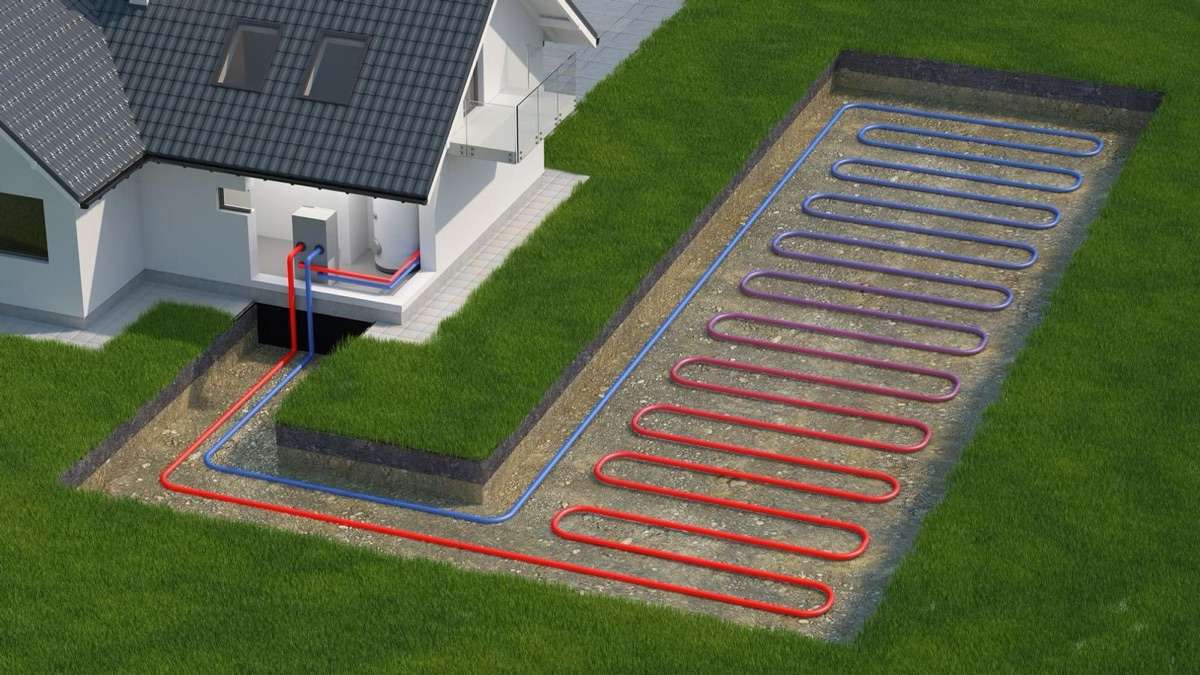
How deep do geothermal bores go?
It depends on the design and the ground. Vertical bores commonly run a few hundred feet, and the total footage is split across several bores sized to your load. The loop design sets the count and depth.
How many days will crews be at my house?
Plan on several days in total, split between loop work outside and the indoor install, and weather can stretch the outdoor part. Drilling or trenching usually comes first, and the proposal includes a schedule.
Can geothermal go into an older house with existing ductwork?
Often, yes. Geothermal units deliver air at a lower temperature than a furnace, so they move more of it, and some older duct systems need larger returns or a few changes. We check duct sizes at the site visit and include any changes in the quote.
What happens to my lawn during the install?
Expect torn-up ground where the rig or excavator works and along the trench to the house. We backfill to rough grade, and seed or landscaping goes back in after the soil settles.
Does a geothermal system need a chimney or a gas line?
No. A geothermal heat pump runs on electricity and burns nothing, so there's no flue, no combustion and no gas connection. That's one reason it appeals to homes heating with propane today.
Is geothermal a good fit for a new house we're building in Summit or Medina County?
New construction is one of the best times to do it. The yard is open, the ductwork can be designed for the heat pump from the start, and the loop goes in before landscaping. Bring us in early, ideally before the site plan is final.
Who services the system once it's in?
We do. A yearly visit checks loop pressure, temperatures, airflow and electrical parts, and an Echols service agreement puts that visit on the calendar for you.